
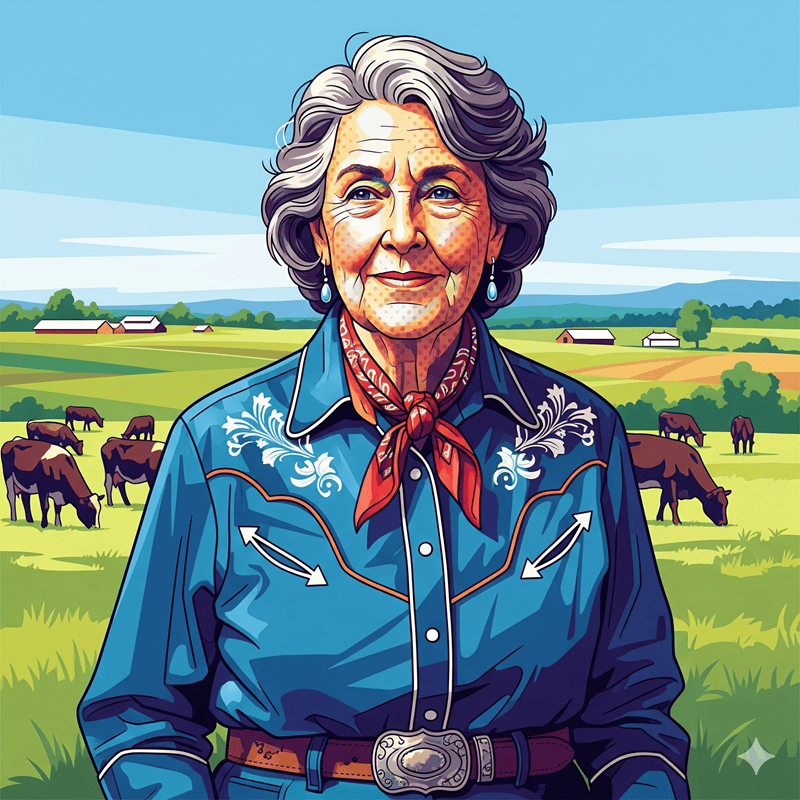
When we think of inspirational people who’ve turned adversity into achievement, few stories shine as brightly as that of Temple Grandin. Her journey is one of deep challenges, unrelenting perseverance, and a mind that not only defied expectations but reshaped how the world understands autism — and animals. Temple’s inspiring story isn’t just about success; it’s about embracing who you are, thinking differently, and using that difference to make a lasting impact.
Table of Contents
Who is Temple Grandin and Were Does Her Story Begins?
Temple was born in 1947 in Boston, Massachusetts. Her parents are Richard Grandin and Eustacia Cutler—people whose love and determination shaped the foundation of her incredible journey.
From a young age, her mother noticed she wasn’t talking, hugging, or smiling. At three years old, Temple was mute and did not make eye contact; she could not speak, and her parents were not given a proper diagnosis. Instead, doctors told them that she might have brain damage and would likely be institutionalized.
Diagnosed with autism in 1950 at age three, though some sources indicate a formal diagnosis didn’t come until adulthood, Temple’s early years were marked by misunderstanding and stigma. At the time, autism was barely known, and harmful myths, such as the “frigid mother” theory, were common. Grandin’s mother refused to accept these explanations and sought alternative support.
A dedicated nanny played a crucial role in Temple’s early development, engaging her in turn-taking games and providing hours of one-to-one instruction. Eventually, Temple began to speak, though certain social skills remained elusive.
What Obstacles Did Temple Grandin Overcome on Her Journey?
Temple’s mother never gave up hope. She took Temple to neurologists and speech therapists, an intervention that was rare at the time. With the support of her parents, her nanny, early education intervention, and a dedicated speech therapist, Temple began to thrive.
Despite her brilliance, Temple was misunderstood by friends, teachers, and society. High school was especially challenging, filled with bullying and teasing. The only places she could escape the teasing were specialized activities like horse riding, electronics lab, or model-rocket club, which nurtured her creativity and imagination.
As she matured, Temple’s family discovered her remarkable mind. She cataloged images in her mind, fixated on moving objects, and easily understood how things worked. Her interest in animals blossomed while caring for the horse barn at her high school and visiting her aunt’s ranch.
Temple Grandin’s passion for science was ignited by her high school teacher and mentor, Dr. Carlock, who recognized her unique talents beyond the labels others saw. Unlike many educators, he didn’t try to pull her into a conventional mold, instead, he entered her world, guiding her fixations into hands-on, meaningful projects. His belief in her potential helped set her on the path to becoming one of the most influential voices in science and animal behavior.
What Were Temple Grandin’s Professional Achievements?
Temple graduated from Franklin Pierce College with a Bachelor of Arts in Psychology in 1970, later earning a master’s in animal science from Arizona State University and a doctorate from the University of Illinois.
When she started working in the beef industry in 1970, most women were secretaries. Grandin became the first woman in Arizona to handle cattle, breaking barriers not only as a person with autism but also as a female scientist in a male-dominated field. She faced harassment and sexist biases, yet persevered.
Temple began writing articles to share her ideas about livestock behavior and facility design. Her freelance business grew project by project.
She saw things in animals that most people couldn’t, leading her to design innovative cattle handling systems and devices to calm livestock during vaccinations.
Her restraining machines soothed animals and reduced injuries while aiming for increased productivity, and her designs are now used in facilities across the United States, Canada, and Europe.
What Makes Temple Grandin Stand Out Among Inspirational Figures?
Grandin stands as a powerful testament to determination and inspiration—she has become a beacon of hope for those navigating autism and a role model for innovators everywhere. Here are three inspiring reasons why she continues to stand out:
- Academic Achievement beyond autism: She is a renowned professor of animal science at Colorado State University, an autism advocate, public speaker, best-selling author, and a pioneer who revolutionized the livestock industry through her humane facility designs.
- Temple changed how we understand the autistic mind: Her books, including Thinking in Pictures and The Autistic Brain, explore the connection between autism and visual thinking. Temple discovered that people on the autism spectrum may have specialized thinking styles, such as mathematical or verbal strengths. Through her studies, she helped the world see autism not as a limitation, but as a different—and often brilliant—way of thinking.
- Grandin became a global symbol of courage and influence: She was named one of TIME Magazine’s 100 Most Influential People in the world in the “Heroes” category. The HBO movie Temple Grandin won seven Emmy Awards, further cementing her impact in autism advocacy. Her inspiring story continues to inspire thousands around the world.
What We Can Learn From Temple Grandin’s Inspiring Story?
Temple’s story is more than just a personal success—it’s a powerful reminder of how thinking differently can lead to extraordinary impact. Her journey shows us that curiosity and experimentation can create a lasting change and challenge the way the world works. Here are three key lessons we can all learn from Temple:
- Don’t be afraid to think differently: Your unique way of seeing the world is a strength. We often grow up thinking there’s a “right” way to think, to learn and to communicate in order to succeed. But people like Temple Grandin challenge that idea, and show us that sometimes the most impactful breakthroughs come from minds that don’t follow the standard script.
- Explore and experiment: Temple Grandin didn’t follow a straight path, she explored, built things, and followed her curiosity. Her journey shows us that discovery comes from doing, even if you don’t know exactly where you’re going yet.
- Make a positive impact: Temple didn’t just succeed for herself, she used her knowledge to make life better for animals and open minds about autism. Her story reminds us that the best kind of success is the kind that helps others too.
- Be grateful to those who believed in you: Temple never forgot her parents, her teachers and mentors, who saw her potential before anyone else did. Their belief helped shape her future, and her gratitude is a reminder of how powerful encouragement can be.
What is Temple Grandin’s Inspiring Legacy? Embracing Neurodiversity
Grandin’s legacy highlights the power of recognizing and nurturing individual strengths. Her life’s work—spanning education, animal welfare, and autism awareness—shows how embracing neurodiversity can lead to lasting, compassionate change.
Temple emphasizes the importance of recognizing and building on the strengths of children with autism. With recent studies estimating that 1 in 32 children will be diagnosed with autism spectrum disorder (ASD), her message is more relevant than ever. For Temple, that strength was art—an interest that became the foundation of her career and life’s work.
She advocates for understanding children beyond their diagnosis, noting that many with autism, dyslexia, or Attention Deficit Hyperactivity Disorder (ADHD) excel in one area but struggle in others. By nurturing their one strength that makes them unique, these children can turn their skill into their life purpose or career.
Even today, Grandin continues to teach, share, and inspire, not just in the classroom, but across the world. She still consults with the livestock industry, advocating for more humane treatment of animals, and finding joy in every bit of progress made. For Temple, true happiness comes from knowing she’s making a difference, turning compassion into action, and using her voice to create lasting change.
Temple Grandin’s inspirational journey offers deep insights into autism and overcoming adversity, highlighting the importance of embracing neurodiversity. Her inspiring story demonstrates the incredible possibilities that arise when we value different ways of thinking.
“The world needs all kinds of minds.” – Temple Grandin
Amazed by Temple Grandin’s inspirational journey? Discover more stories of strength, resilience, and triumph over adversity. Just click on her to read more about 12 Inspirational People Who Defied All Odds!
Frequently Asked Questions about Temple Grandin
Who is Temple Grandin?
Temple Grandin is a pioneering animal behavior expert and autism advocate who was born in 1947. Despite early challenges with autism, she became a leading voice for neurodiversity and innovative livestock handling.
Where does Temple’s story begin?
Temple’s story begins in Boston, Massachusetts, where she was born and diagnosed with autism at age three. Her early years involved overcoming misunderstandings and stigma, thanks to her family’s unwavering support.
Who are Temple Grandin’s family members?
Temple’s parents are Richard Grandin and Eustacia Cutler. Their love and determination played a vital role in supporting her through early challenges with autism.
What challenges did Temple face as a child?
As a young child, Temple was mute, avoided eye contact, and struggled with social interaction. Doctors initially suggested she could be institutionalized, but her family refused to accept those predictions.
Who helped Temple during her early development?
A devoted nanny played a key role in Temple’s early growth by engaging in turn-taking games and providing hours of one-to-one instruction, helping her develop speech and some social skills despite ongoing challenges.
What were Temple Grandin’s hobbies growing up?
Temple found joy in specialized activities such as horse riding, the electronics lab, and the model-rocket club, which allowed her creativity and imagination to flourish.
How did Temple’s interest in animals begin?
Temple’s passion for animals grew while caring for the horse barn at her high school and visiting her aunt’s ranch, where she connected deeply with animal behavior.
Who was Temple Grandin’s mentor in high school?
Temple’s mentor in high school was Dr. Carlock, a science teacher who saw her potential. He guided her through hands-on projects and helped channel her fixations into meaningful learning, inspiring her passion for science.
What made Temple a pioneer in the beef industry?
Temple became the first woman in Arizona to handle cattle professionally in the 1970s, breaking gender and disability barriers in a male-dominated industry
How did Grandin contribute to animal welfare?
She designed innovative cattle handling systems that reduced animal stress and injury. Her systems are now used widely across the U.S., Canada, and Europe.
What makes Temple Grandin an inspirational figure?
Temple inspires people worldwide through her achievements in innovation, advocacy for autism, and personal resilience. She turned early challenges into a platform for global change.
How has Temple changed the way we understand autism?
Through books like Thinking in Pictures, Grandin showed that autism often involves unique thinking styles. She helped shift the view of autism from limitation to strength.
How does Temple recommends to support children with autism?
Temple advocates focusing on each child’s unique strengths, like art or math, helping them build a meaningful life or career beyond their diagnosis.
How has Temple been recognized on the global stage?
She has received worldwide recognition, including being named one of TIME Magazine’s 100 Most Influential People. Her life was also featured in the Emmy-winning HBO film Temple Grandin, bringing global attention to her work and advocacy.
What inspiring work does Temple Grandin do today?
Temple continues to inspire by teaching, consulting on humane livestock practices, and influencing people worldwide—turning her compassion into meaningful action.